
Finance Minister Nirmala Sitharaman stated that the Reserve Bank of India (RBI) will persist in its efforts to prevent excessive volatility in the rupee, which has significantly depreciated against the US dollar due to global uncertainties, despite India's strong macro-economic fundamentals.

India does not need to win the model race to win the AI era. It needs to be the country that cannot be switched off, can be trusted by its citizens, and is useful to the rest of the world, asserts Rajeev Srinivasan.

Shailesh Chandra, MD and CEO of Tata Motors Passenger Vehicles (TMPV), stated that the uncertainty surrounding how long commodity costs will remain elevated is a greater concern for the company than the actual price increases. He noted that commodity prices have risen significantly over the past five to six months, impacting margins and necessitating faster cost-reduction efforts, though no major production or supply-side issues are currently foreseen.

For the foreseeable future, the most likely outcome remains continuation of the status quo. Taiwan will remain self-governing without formally declaring independence, while China continues to apply sustained pressure short of war, predict Krishnan Srinivasan and Manoj Mohanka.

'Companies are getting selective about what they pay a premium for.'

'The large number of tariff lines in the 90-99 per cent band highlights how deeply embedded Chinese sourcing has become in India's electronics imports.'

Indian two-wheeler buyers are increasingly opting for feature-rich, higher-end variants and premium motorcycles, driven by technology, safety, and easier access to finance, according to TVS Motor Company. The company is also exploring alternative electric motor technologies to secure its supply chain amidst growing EV penetration.

Semiconductor makers need thousands of engineers and technicians, and though India has one of the largest pool of engineers in the world, they do not have experience in the semiconductor manufacturing space.
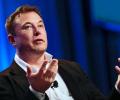
SpaceX and Tesla are jointly investing USD 16.8 billion to construct 'Terafab', an advanced AI semiconductor complex in Grimes County, Texas. This massive facility aims to address the global chip supply shortage, create thousands of jobs, and produce AI chips for Elon Musk's various ventures, including Tesla's robots and SpaceX's orbital data centres. The project is supported by a USD 30 million grant from the Texas government.

The GraphIN 2026 conference in Kochi brings together global experts to discuss advancements in graphene and two-dimensional materials, highlighting India's growing role in electronics and semiconductor manufacturing.
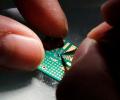
US-based chip maker Intel has signed an agreement with Tata Group to manufacture and assemble semiconductors in India for the local market, the Indian conglomerate said on Monday.

A cyberattack on an automaker can spread through its wider supply chain and create significant financial losses.

The visit was expected to project Assam as the gateway to Southeast Asia and reinforce the state's emergence as a preferred investment destination.
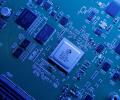
Union Minister Ashwini Vaishnaw announced that two more semiconductor chip packaging units, part of the India Semiconductor Mission, are expected to be operational by July and December, respectively. He also highlighted India's focus on becoming a beneficiary of AI technology, expanding data centre infrastructure with significant investments, and developing new subsea cable networks for global connectivity.

Tata Sons has the balance sheet to support them, for now.

Prime Minister Narendra Modi has urged for a global framework to combat cross-border cyber frauds and deepfakes, highlighting the need for governments, tech companies, telecom operators, and financial institutions to collaborate. Speaking at the India Mobile Congress 2026, Modi stressed that technology thrives on trust and that India is ready to share its expertise in tackling cyber threats. He also noted the rapid expansion of 5G and the success of digital governance initiatives like Direct Benefit Transfer.
Indian conglomerate Vedanta on Monday said it has signed a pact with electronics manufacturing services giant Foxconn to form a joint venture (JV) for manufacturing semiconductors in India. Vedanta is the first company to make the announcement to invest in semiconductor manufacturing after the government announced a Rs 76,000-crore programme to boost electronic chip and display ecosystem in the country. This is also the second attempt of Vedanta to enter the semiconductor space after its earlier plans to set up a display unit with about Rs 60,000 crore investment could not take off.

Tata Electronics' Rs 91,000 crore semiconductor fab in Dholera, Gujarat, in partnership with PSMC, will generate over 20,000 direct and indirect skilled jobs in the region and construction of the mega unit is expected to begin this year, according to a statement on Thursday. The planned unit - India's first commercial fab, marks Tata Electronics' entry into the global semiconductor industry. Tata Electronics said it is "proud to lead India's entry into global semiconductor fabrication".

The global artificial intelligence (AI) boom has significantly reshaped equity markets, with Taiwan surpassing India to become the world's fifth-largest stock market. India has seen its market capitalisation decline by 7% year-to-date, while AI-linked economies like Taiwan and South Korea have surged.

The unprecedented rally in artificial intelligence (AI)-linked stocks has led to Indian companies being excluded from the top 10 constituents of the MSCI Emerging Markets (EM) Index for the first time in over two decades, raising concerns about concentration risk.

Notwithstanding the economic complementarities and the host of agreements for deepening economic relation on a host of areas, both sides share common viewpoints on the foreign policy domain and seek common grounds to serve as a counterweight to China, notes Dr Rajaram Panda.

Natarajan Chandrasekaran, credited with stabilising Tata Sons after a boardroom coup and overseeing significant expansion, has announced his resignation as chairman, capping a nearly decade-long tenure marked by both successes and escalating tensions with the group's controlling charitable trusts.

Larsen & Toubro (L&T) is investing Rs 5,000 crore over five years to enter the automotive components sector, focusing on electric vehicle (EV) motors, safety systems, and connected-vehicle technologies, aiming to become a Tier-I auto supplier.

The Modi government is launching a 'One Day, One University' programme, sending Union ministers to universities daily to engage with Gen Z, address their concerns, and inform them about government schemes. This initiative follows recent student protests over the NEET paper leak and aims to foster better understanding between the youth and the government.

The search for N Chandrasekaran's successor as Tata Sons Chairman has reportedly narrowed to Tata Steel CEO T V Narendran, Tata Sons Executive Director Saurabh Agrawal, and NSE MD & CEO Ashish Chauhan, with Chauhan emerging as a potential 'dark horse' candidate.

'... that work is done. The task is to reallocate what has been built, with the courage of a founder and the discipline of an owner.'

'Improved law and order and transparent governance have helped change UP's investment image.'
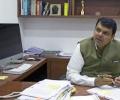
Maharashtra Chief Minister Devendra Fadnavis announced the state's ambition to become India's leader in quantum technology. The state plans to build a robust ecosystem, align with the National Quantum Mission, and train over 5,000 professionals, recognising AI, semiconductors, and quantum tech as key pillars for future growth and global competitiveness.

Prime Minister Narendra Modi announced a new target of creating six crore 'Lakhpati Didis' to empower women and transform the rural economy. He highlighted the success of the existing initiative and the growing contribution of women in various sectors, from defence to technology.

Due to the prevailing geopolitical situation, like-minded countries are collaborating with India to make it a major semiconductor manufacturing destination, a top Electronics and IT ministry official said on Sunday. In an interview with PTI, Ministry of Electronics and IT Secretary S Krishnan said pilot facilities of US storage semiconductor maker Micron and Tata Electronics have already rolled out chips, and their main plants in Gujarat will begin to produce made-in-India chips from the later part of 2025.

Andhra Pradesh is set to launch India's first indigenously built, open-access quantum computers, marking a significant step towards building a sovereign quantum hardware ecosystem. The initiative aims to position the state as a global hub for quantum technology and enable applications in various sectors.

If India does get $100 billion a year in FDI, it would be a game-changer in every possible way. FPIs would come rushing back, AI or no AI, points out Debashis Basu.
Tata Sons will likely choose Singapore as a "key partner" for its semiconductor plans, a senior minister from the city-state said on Friday. Speaking to reporters after a meeting with Tata Sons chairman N Chandrasekaran earlier in the day, Singapore's minister for home affairs and law K Shanmugam said semiconductors was a "big discussion" point during the meeting. "If they (Tatas) want to, they can do business with anybody in the world.

Prime Minister Narendra Modi, in his 80th Independence Day address, expressed strong confidence that India will achieve developed nation status by 2047, urging citizens to embrace big dreams and unwavering resolve to realise 'Viksit Bharat'. He highlighted India's economic transformation and significant growth in various sectors, including defence production, electronic manufacturing, and mobile phone production.

Indian-origin NASA astronaut Anil Menon, along with two Russian cosmonauts, has embarked on an eight-month mission to the International Space Station (ISS) aboard a Soyuz MS-29 spacecraft. This marks Menon's first spaceflight, where he will conduct scientific research and technology demonstrations focused on human space exploration, microgravity effects, and in-space production of advanced materials.
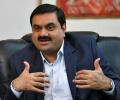
Chip giant Qualcomm chief executive Cristiano R Amon and billionaire Gautam Adani on Monday discussed role of AI, semiconductors and edge appliances across markets in the fast changing global technology space. The two leaders met in Mumbai on Monday morning to discuss India's potential around semiconductors, AI and mobility, according to a social media post by Adani. While Qualcomm is big on designing and manufacturing semiconductors and wireless telecommunications products, Adani group had in 2022 bought a small quantity of fifth generation or 5G spectrum for private captive network deployment in ports, logistics and power generation among others.

Apple CEO Tim Cook's strategic pivot, from initial rejections to local partnerships and leveraging government policies like PLI, transformed India into a major iPhone manufacturing and export hub, now accounting for one in every four iPhones assembled globally.
Anil Menon, a NASA astronaut of Indian descent, is embarking on an eight-month mission to the International Space Station. A former US Space Force colonel and emergency medicine physician, Menon will conduct vital experiments on the physiological effects of long-duration spaceflight, develop in-space medical technologies, and research semiconductor crystal production, contributing significantly to future deep-space missions and advanced technology.
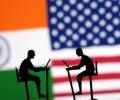
A Parliamentary Standing Committee on Commerce has urged the Indian government to swiftly conclude the proposed India-US Bilateral Trade Agreement (BTA), while ensuring India's interests are protected, recommending complete exemption for key export products like generic medicines and smartphones from future US tariff increases.

Indian companies' overseas expansion plans are holding strong despite geopolitical tensions in West Asia, driven by structural factors like supply-chain diversification, free trade agreements, and market expansion, according to Ajay Sharma, managing director and head of banking at HSBC India.
